Close
There’s something beautifully paradoxical about instrumental music’s ability to serve two seemingly opposite human needs with equal power and grace. In the hushed silence of a meditation room, the same fundamental musical principles that make bodies move in ecstatic celebration on a dance floor can guide minds into the deepest states of inner peace. This isn’t coincidence—it’s the profound magic of pure musical expression, unencumbered by words, speaking directly to the ancient rhythms that govern both our spiritual seeking and our physical being.
As a beatmaker, you’ve likely experienced both sides of this equation. You’ve crafted tracks that make people lose themselves in movement, and perhaps you’ve also created pieces that seem to slow time itself, inviting listeners into contemplative spaces where breath becomes music and music becomes breath. The truth is, the same creative wellspring feeds both experiences—the understanding that instrumental music operates in the realm of pure energy, communicating directly with our nervous systems, our cellular memory, our deepest evolutionary programming.

In meditation, the goal is often to quiet the endless mental chatter that dominates our waking consciousness—that internal narrator constantly commenting, judging, planning, worrying. Vocal music, no matter how beautiful or well-intentioned, can actually feed this mental activity. Lyrics give the mind something to grab onto, to analyze, to associate with memories and meanings. Even the most spiritually oriented sung mantras can keep us operating in the realm of language and conceptual thinking.
Instrumental music offers something far more precious: a bridge between sound and silence that doesn’t engage our language centers. When you hear the sustained note of a singing bowl, the gentle pulse of a wooden flute, or the carefully crafted ambient textures of an electronic meditation track, your mind doesn’t try to decode meaning or narrative. Instead, it begins to align with the music’s natural rhythms, allowing the boundaries between listener and sound to dissolve.
Modern neuroscience has revealed the profound physiological changes that occur when we meditate with instrumental music. Brain wave patterns shift toward alpha and theta frequencies—the same patterns associated with deep relaxation, creativity, and heightened awareness. Heart rate variability improves, indicating a more balanced autonomic nervous system. Cortisol levels drop while beneficial neurotransmitters like dopamine and serotonin increase.
But these clinical measurements barely capture the lived experience of deep musical meditation. There’s that moment when the boundary between your breathing and the music’s rhythm disappears, when the sound seems to be arising from within your own body rather than from external speakers. There’s the profound sense of expansion that happens when a slowly evolving drone seems to carry your consciousness beyond the confines of your physical form.
The power of rhythmic entrainment—our tendency to synchronize with external rhythms—becomes a tool for profound inner transformation in meditative contexts. When instrumental music pulses at around 60 beats per minute (close to a resting heart rate), our bodies naturally begin to align with this calm rhythm. Breathing deepens, muscle tension releases, and the entire nervous system shifts into what researchers call the « relaxation response. »
But entrainment in meditation goes deeper than simple physiological synchronization. The right instrumental track can entrain not just our bodies, but our entire energetic field. Ancient traditions speak of this as the music helping to align our personal rhythms with larger cosmic rhythms—a return to the natural harmony that modern life often disrupts.
Across cultures and throughout history, instrumental music has been humanity’s companion in spiritual exploration. Tibetan singing bowls, Native American flutes, Indian ragas played on sitar, Sufi ney flutes, African kalimbas—these traditions understood something profound about the relationship between wordless music and transcendent states of consciousness.
What’s remarkable is how contemporary electronic music producers have intuitively rediscovered these same principles. Ambient artists like Brian Eno, sound healing practitioners, and even some beat makers working in meditative hip-hop are creating music that serves the same function as ancient spiritual instruments—facilitating states of consciousness that words cannot reach.
Dance predates language. Before humans developed complex speech, we were moving our bodies to rhythm, communicating through movement, celebrating and mourning and expressing the full spectrum of human experience through physical expression. Instrumental music taps directly into this ancient communication system, bypassing cognitive processing and speaking straight to the body’s wisdom.
When lyrics are absent, the body becomes the translator of musical meaning. Every beat, every melodic phrase, every harmonic shift is interpreted through movement. The dancer becomes the voice of the music, giving physical form to invisible sound waves. This is why instrumental dance tracks often create more profound movement experiences than vocal tracks—there’s no competing narrative, no predetermined meaning that might conflict with what the body wants to express.
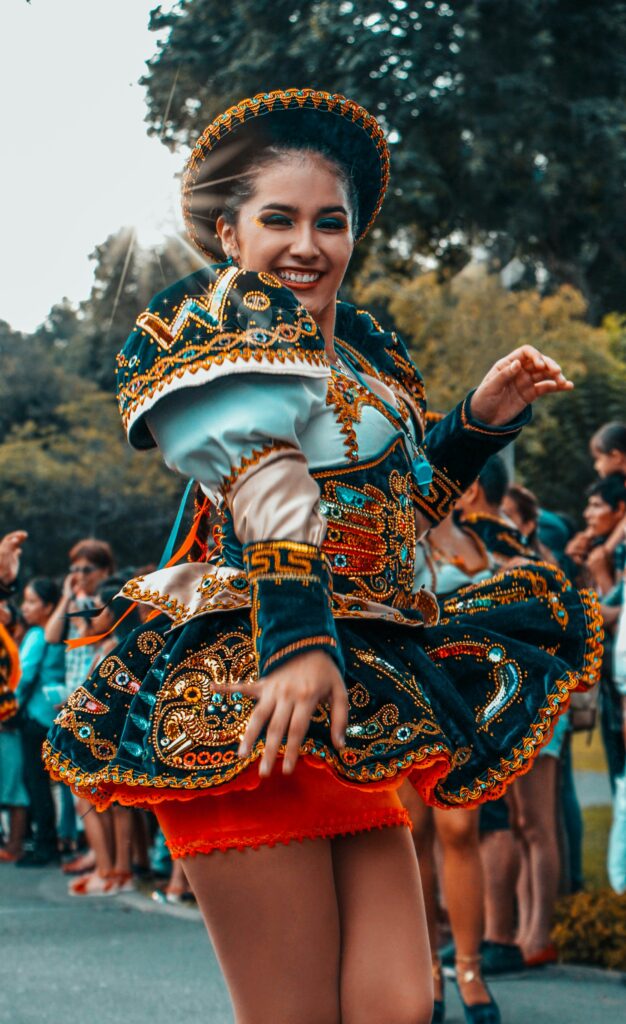
Throughout history, dance has been recognized as a spiritual practice as powerful as any seated meditation. Sufi whirling, ecstatic dance traditions, shamanic journeying through movement—these practices understand that repetitive, rhythmic movement to instrumental music can induce transcendent states of consciousness every bit as profound as those achieved through stillness.
In these traditions, the absence of lyrics isn’t a limitation—it’s a liberation. Without words to guide or constrain the experience, dancers can access their own inner guidance, allowing their bodies to express whatever needs to be expressed, to release whatever needs to be released, to celebrate whatever wants to be celebrated. The music becomes a container for the sacred, and the body becomes the medium through which the sacred expresses itself.
When we dance to repetitive instrumental music, particularly music with strong rhythmic elements, our brains begin producing theta waves—the same brainwave patterns associated with deep meditation, creative insight, and mystical experiences. The repetitive nature of dance movements, combined with the rhythmic pulse of instrumental beats, creates a form of moving meditation that can be just as transformative as seated contemplative practices.
The release of endorphins during extended dance sessions creates natural highs that can last for hours or even days. More importantly, the combination of movement and rhythm appears to stimulate the production of BDNF (brain-derived neurotrophic factor), a protein that promotes the growth of new neural connections and can actually reshape brain structure over time.
One of instrumental music’s most powerful qualities is its ability to communicate across cultural and linguistic barriers. A perfectly crafted Afro-Latin percussion pattern can make people move whether they’re in Havana, Tokyo, or Stockholm. The fundamental appeal of rhythm transcends cultural programming because it speaks to aspects of human experience that are universal—the heartbeat, the breath, the natural cycles that govern all life.
This universality makes instrumental dance music a form of global communication. When you create a beat that gets people moving, you’re participating in a conversation that spans cultures and generations. You’re tapping into rhythmic patterns that resonate with something deep in human DNA, something that connects us to our ancestors who danced around fires, celebrated harvests, and used movement to commune with forces larger than themselves.
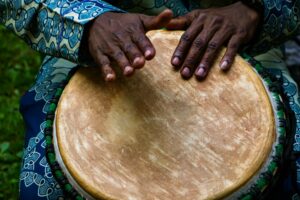
Instrumental music creates uniquely democratic experiences on dance floors. Without lyrics to understand or cultural references to decode, the music becomes accessible to everyone present. Language barriers disappear, social hierarchies dissolve, and people connect through the shared language of rhythm and movement.
I’ve witnessed this magic countless times—diverse crowds coming together on dance floors where instrumental tracks are playing, people from completely different backgrounds finding common ground in the universal language of beat and movement. In these moments, the dance floor becomes a temporary utopia where differences are celebrated through individual expression while unity is maintained through shared rhythm.
Modern digital production tools have democratized the creation of music specifically designed for meditation and dance. Software synthesizers can create sustained tones that ancient monks achieved through years of vocal training. Digital effects can create spatial audio experiences that mirror the acoustic properties of sacred temples and caves. Sampling technology allows producers to incorporate sounds from nature, traditional instruments, and found objects into carefully crafted sonic environments.
But the real revolution isn’t in the technology itself—it’s in how contemporary producers are using these tools to create music that serves consciousness expansion and embodied celebration. Beat makers are becoming inadvertent spiritual teachers, creating tracks that facilitate transcendent experiences for listeners around the world.
Creating instrumental music for meditation and dance requires understanding how sound affects consciousness and how rhythm affects the body. It’s about learning to craft sonic architecture—designing musical spaces where transformation can occur. This might mean understanding how low frequencies affect the nervous system, how certain intervals create feelings of expansion or grounding, how rhythmic patterns can induce specific brainwave states.
The most skilled producers working in these realms understand that they’re not just making music—they’re creating tools for human transformation. Every choice about tempo, timbre, harmonic content, and rhythmic complexity is made with awareness of how it will affect the listener’s state of consciousness or physical experience.
In meditation, we cultivate what many traditions call feminine or receptive qualities—openness, acceptance, allowing, being rather than doing. Instrumental meditation music supports this receptive state by creating gentle, non-demanding soundscapes that invite us to simply be with what is, to receive whatever arises without judgment or the need to respond.
Dance, by contrast, engages what might be called masculine or expressive qualities—creative force, physical manifestation, the active expression of inner energy. Instrumental dance music provides the rhythmic structure that allows this expression to flow freely while maintaining coherence and direction.
The beauty is that both states are necessary for complete human experience, and instrumental music can facilitate both with equal grace. Sometimes we need to receive, to open, to allow ourselves to be carried by sound into states of deep peace. Sometimes we need to express, to move, to let our inner fire manifest through physical celebration.
The most profound experiences often occur when these seemingly opposite states begin to merge—when dance becomes a form of moving meditation, or when seated meditation incorporates gentle, rhythmic movement. Instrumental music is uniquely suited to support these integrated practices because it doesn’t force us to choose between receptivity and expression. It creates space for both qualities to coexist and inform each other.
Every cell in our body vibrates at specific frequencies, and instrumental music can literally help retune our cellular resonance. Sound healing practitioners have long understood that specific frequencies can promote healing, reduce inflammation, and restore energetic balance. The absence of lyrics allows these healing frequencies to work without interference from cognitive processing.
When we meditate with instrumental music, we’re essentially receiving a form of vibrational medicine. When we dance to instrumental beats, we’re using movement and rhythm to shake loose stagnant energy, promote circulation, and restore natural flow to systems that may have become blocked or congested.
Both meditative listening and ecstatic dance can facilitate profound emotional release. Instrumental music creates safe containers for emotions that might be too overwhelming to process through verbal expression. In meditation, challenging emotions can arise and be witnessed without the need to understand or analyze them. In dance, these same emotions can be expressed and released through movement.
The absence of lyrics means there’s no prescribed way to feel or interpret the emotional content of the music. This freedom allows for authentic emotional processing that follows the listener’s or dancer’s own inner guidance rather than external suggestions about how they should respond.
Afro-Latin musical traditions offer profound insights into the seamless integration of meditative and ecstatic states. Many traditional ceremonies incorporate extended periods of rhythmic music that simultaneously induce trance-like states and encourage physical expression. Participants can drift into deeply meditative consciousness while their bodies continue to move in harmony with the rhythmic patterns.
Contemporary producers working with Afro-Latin influences can learn from these traditions how to create music that serves both contemplative and celebratory purposes. The polyrhythmic complexity provides enough interest to maintain engagement during extended listening sessions, while the repetitive nature supports both meditative states and sustained dance experiences.
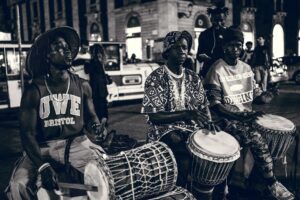
The most exciting developments in instrumental music for meditation and dance often occur when electronic production techniques meet organic instrumentation and ancient wisdom. Producers who understand both the technological possibilities of modern equipment and the spiritual principles underlying traditional practices are creating entirely new forms of transformational music.
These hybrid approaches might combine synthesized frequencies specifically chosen for their healing properties with live recordings of traditional instruments, or use electronic processing to extend and enhance the natural resonance of acoustic instruments. The goal isn’t to replace traditional approaches but to expand the palette of possibilities for creating music that serves human transformation.
When you create instrumental music designed to support meditation or dance, you’re stepping into an ancient lineage of musicians who understood that their role extended far beyond entertainment. You’re joining a tradition that sees music-making as a form of service, a way of offering support for other people’s spiritual and physical well-being.
This understanding can transform how you approach the creative process. Instead of just trying to make music that sounds good or gets attention, you might find yourself asking deeper questions: How will this music affect someone’s nervous system? What state of consciousness am I trying to support? How can I create space within this track for authentic transformation to occur?
With this deeper understanding comes responsibility. When you create music that affects people’s consciousness and physical state, you’re wielding tools that can heal or harm, elevate or manipulate. The most ethical approach is to create from a place of genuine service, with respect for the power of rhythm and harmony to influence human well-being.
This doesn’t mean your music needs to be serious or solemn—joy and celebration are as sacred as peace and introspection. It means approaching your craft with awareness that instrumental music, particularly music designed for meditation and dance, touches people at levels deeper than casual entertainment.
As virtual and augmented reality technologies develop, the possibilities for creating immersive instrumental experiences for meditation and dance continue to expand. Biofeedback systems might allow music to respond in real-time to listeners’ physiological states, creating truly personalized soundscapes for transformation. Spatial audio technologies might recreate the acoustic properties of sacred spaces or natural environments, enhancing the meditative or dance experience.
But regardless of technological advances, the fundamental principles remain constant: instrumental music’s power lies in its ability to communicate directly with our bodies and spirits without the mediation of language. The future will likely bring new tools for creating and experiencing this communication, but the essential magic will remain unchanged.
We’re currently witnessing a global renaissance in both contemplative practices and conscious dance traditions. People around the world are rediscovering the transformative power of meditation and movement, often in forms that blend ancient wisdom with contemporary understanding. Instrumental music producers are playing a crucial role in this renaissance, creating the soundtracks for humanity’s return to these powerful practices.
In a world increasingly dominated by information, analysis, and verbal communication, instrumental music offers something precious and rare: the opportunity to experience meaning without words, to communicate without language, to transform without understanding exactly how or why. Whether supporting the deepest states of meditative silence or the most ecstatic expressions of dance, instrumental music serves as a bridge between the ordinary consciousness of daily life and the extraordinary states where healing, insight, and celebration become possible.
For those of us who create this music, we carry a beautiful responsibility. We are the architects of invisible temples, the composers of wordless prayers, the choreographers of inner and outer movement. Every beat we program, every melody we craft, every harmonic progression we choose has the potential to support someone’s journey toward greater peace, deeper joy, or more authentic self-expression.
The paradox that began this exploration—how the same music can serve both stillness and movement—resolves itself when we understand that both meditation and dance are forms of coming home to our essential nature. In meditation, we return to the silence and spaciousness that underlies all experience. In dance, we return to the rhythmic aliveness that animates all life. Instrumental music serves both journeys because it speaks the language that connects silence and rhythm, stillness and movement, being and becoming.
Whether your listeners use your music to journey inward toward transcendent peace or outward toward ecstatic celebration, you are offering them a wordless invitation to remember what it feels like to be fully alive, fully present, fully human. In a world that often fragments us between mind and body, thinking and feeling, instrumental music offers the possibility of integration, wholeness, and the kind of profound aliveness that makes life worth living.
The beats continue, the silence deepens, the dance goes on. And in that eternal interplay between sound and space, between rhythm and rest, instrumental music continues to offer what may be its greatest gift: the reminder that we are more than our thoughts, more than our words, more than our daily concerns. We are beings capable of transcendence and ecstasy, of peace and celebration, of finding the sacred in both perfect stillness and joyous movement. Instrumental music is simply the key that unlocks these possibilities, reminding us of who we really are when we stop talking long enough to listen.